
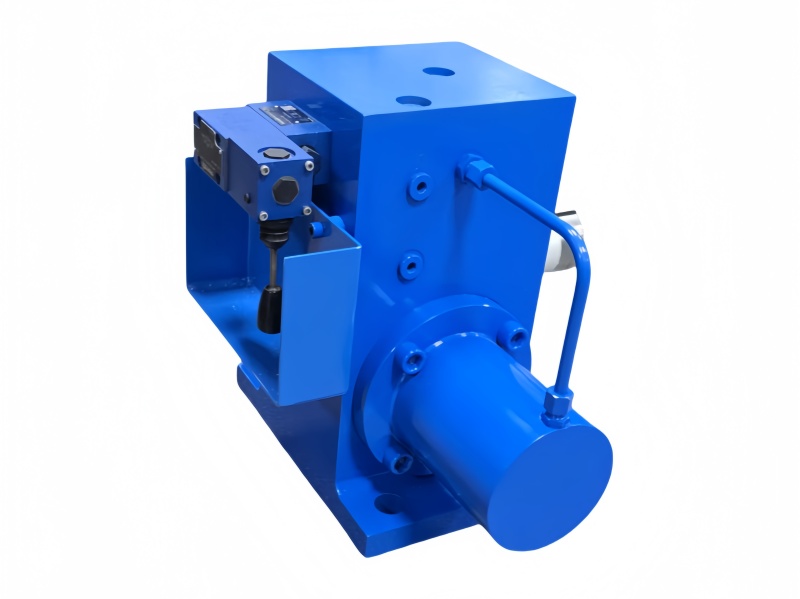

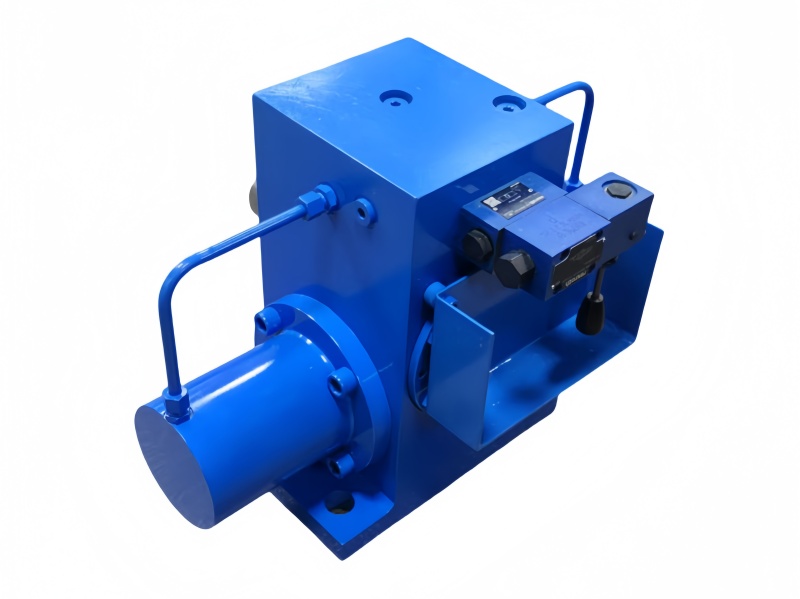
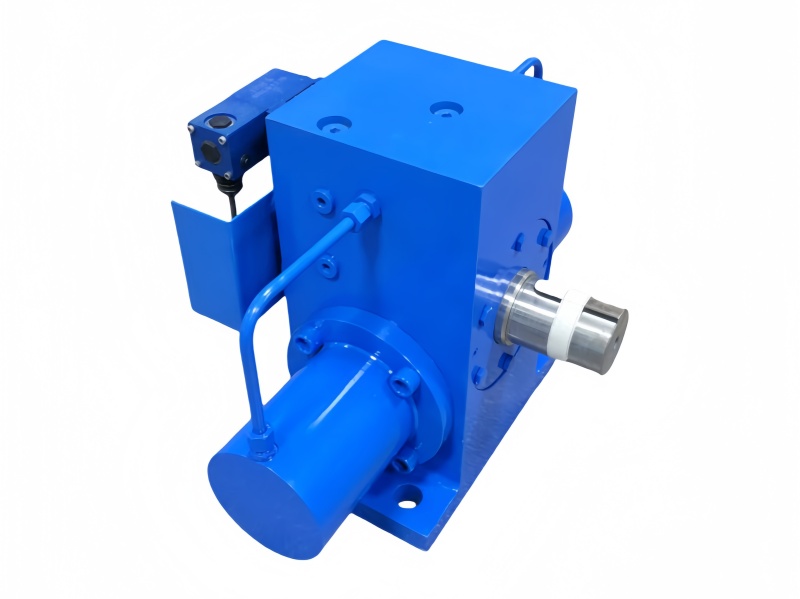

In the wire section of a paper machine, the vacuum roll is one of the core equipment to realize the forming and dewatering of paper sheets, and the vacuum roll rotating device is the key system to ensure the stable and efficient operation of the vacuum roll. It not only needs to drive the vacuum roller to rotate at the speed required by the process, but also needs to cooperate with the vacuum system to realize continuous dehydration, and works in cooperation with other parts of the wire section (such as forming wire, chest roller, etc.), which directly affects the key quality indexes such as paper evenness and strength.
I. Core functions of the device
The core function of the vacuum roller is to quickly discharge the moisture from the paper on the forming wire by internal vacuum suction, and at the same time, the forming wire is driven to run smoothly by rotation. And the core function of the rotating device is:
Provide stable rotating power to drive the vacuum roller to rotate at a set speed (usually matched with the speed of forming wire);
Ensure the sealing between vacuum roller and vacuum system during rotation (avoid vacuum leakage and ensure dehydration efficiency);
Adapt to the complex working conditions (such as vibration and temperature change) of the mesh part and maintain the rotational stability.
Second, the structure composition
The structure of the vacuum roller rotating device needs to take into account the three requirements of power transmission, vacuum sealing and support stability, and mainly consists of the following parts:
1. Drive system
It provides rotating power and is the "power source" of the device. The core components include:
Driving motor: according to the size (1-3m in diameter) and rotating speed (usually 30-100r/min) of vacuum roller, most of them are variable frequency motors (which can adapt to different paper technologies through speed regulation);
Deceleration transmission mechanism: the motor speed is much higher than the required speed of vacuum roller, so it is necessary to reduce the speed and increase the torque through reducers (such as planetary reducers and gear boxes) to ensure the effective transmission of power;
Coupling: To connect the output shaft of the reducer with the vacuum roller shaft, it is necessary to have a certain buffering capacity (to reduce the impact of vibration on the vacuum roller).
2. Support positioning system
Bear the weight of vacuum roller (including roller body, internal vacuum parts and additional load of paper) and ensure the coaxiality when rotating. The core components include:
Bearing seat: Self-aligning roller bearings or double-row cylindrical roller bearings are mostly used to bear radial load (self-weight of vacuum roller and centrifugal force during rotation) and a small amount of axial load (thrust caused by tension of mesh);
Positioning bracket: fixed bearing seat, connected with the wire frame, must have rigidity (to avoid displacement during rotation) and fine adjustment ability (the levelness of vacuum roller can be adjusted through gasket).
3. Vacuum sealing system
The vacuum inside the vacuum roller needs to maintain a vacuum degree of 0.04-0.08MPa, and the dynamic sealing during rotation is the key (otherwise the vacuum leakage will greatly reduce the dehydration efficiency). The core components include:
Mechanical seal: it is installed at the joint between the shaft end of vacuum roller and the fixed vacuum pipeline, and consists of a moving ring (rotating with the roller shaft), a stationary ring (fixed on the frame) and a spring (ensuring the close contact between the rings), and vacuum sealing is realized through the precise cooperation of contact surfaces;
Sealing liquid circulation system: some high-speed vacuum rollers will use sealing liquid (such as lubricating oil) to assist sealing, and at the same time cool the seal (to avoid friction, overheating and wear), which is composed of liquid storage tank, circulating pump and filter.
4. Transmission adjusting mechanism
Used for fine-tuning rotation parameters to adapt to process changes, mainly including:
Rotating speed adjusting unit: adjust the rotating speed of the motor through the frequency conversion control cabinet to realize the accurate matching between the rotating speed of the vacuum roller and the speed of the forming wire (the error should be less than or equal to 0.5%, otherwise the paper will be wrinkled or torn easily);
Axial limit device: it limits the axial displacement of the vacuum roller (axial force may be generated due to the tension of the mesh), usually a retaining ring or thrust bearing installed outside the bearing seat.
Third, the working principle
Power transmission: the driving motor outputs the rotating speed and torque that match the demand of the vacuum roller through the reducer, and transmits it to the vacuum roller shaft through the coupling to drive the roller body to rotate;
Vacuum cooperation: during the rotation process, the moving ring of the mechanical seal rotates synchronously with the roller shaft and closely adheres to the static ring to ensure the connectivity between the internal and external vacuum pipes of the vacuum roller (no leakage), and the vacuum system continuously sucks the paper moisture at the opening of the roller surface;
Mesh cooperation: the rotation speed of vacuum roller is consistent with the running speed of forming mesh (controlled by the rotation speed adjusting unit), and when the roller surface contacts the mesh surface, it forms a stable friction force, which drives the mesh surface to move forward smoothly to avoid slipping or wrinkling of the mesh surface.
Four, the application and maintenance points
Application scenario: it is widely used in the web of various kinds of paper, such as cultural paper, wrapping paper and household paper, especially in high-speed paper machine (speed > 1000 m/min), which requires higher stability of rotating device;
Daily maintenance: regularly check the wear of seals (change sealing fluid every three months), bearing temperature (normal ≤60℃) and rotation speed deviation (daily calibration) to avoid dehydration efficiency reduction and paper breakage caused by vacuum leakage or unstable rotation.
In a word, the rotating device of vacuum roller in wire section is a "bridge" connecting the power system, vacuum system and wire section, and its performance directly determines the dewatering efficiency of vacuum roller and the quality of paper forming, which is one of the core technologies of wire section of modern high-speed paper machine. With the development of high-speed and intelligent papermaking industry, the device is upgrading towards high-precision sealing, adaptive speed regulation and remote state monitoring (such as real-time warning of vibration sensors).